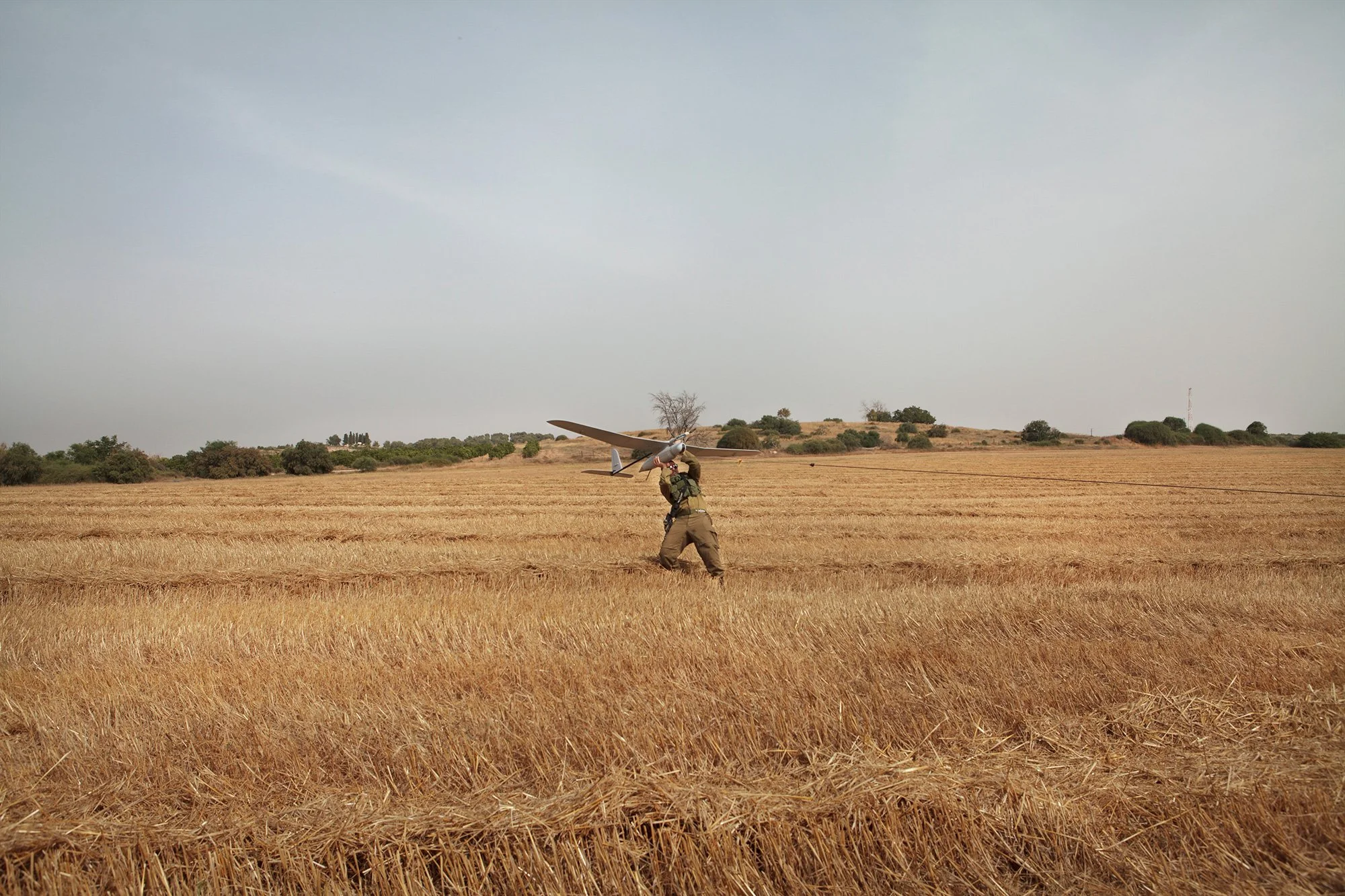
An Israeli soldier from the Sky Rider unit launches a Skylark mini-UAV during a demonstration, close to the border with Gaza.
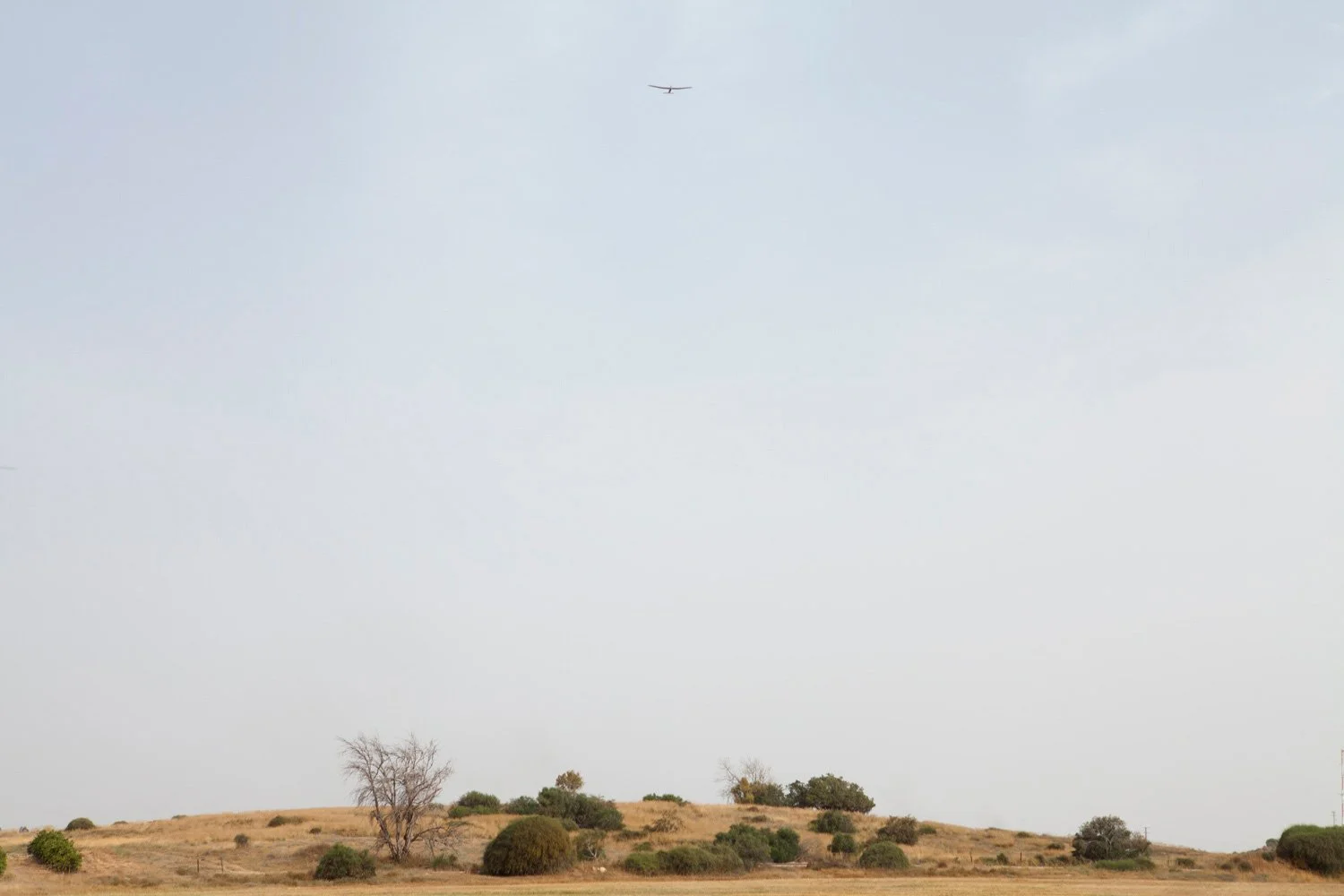
A Skylark drone from a Sky Rider unit. Sky Rider units are part of the artillery brigade and operate on the ground either independently or with other infantry soldiers to provide real-time video from the battlefield.
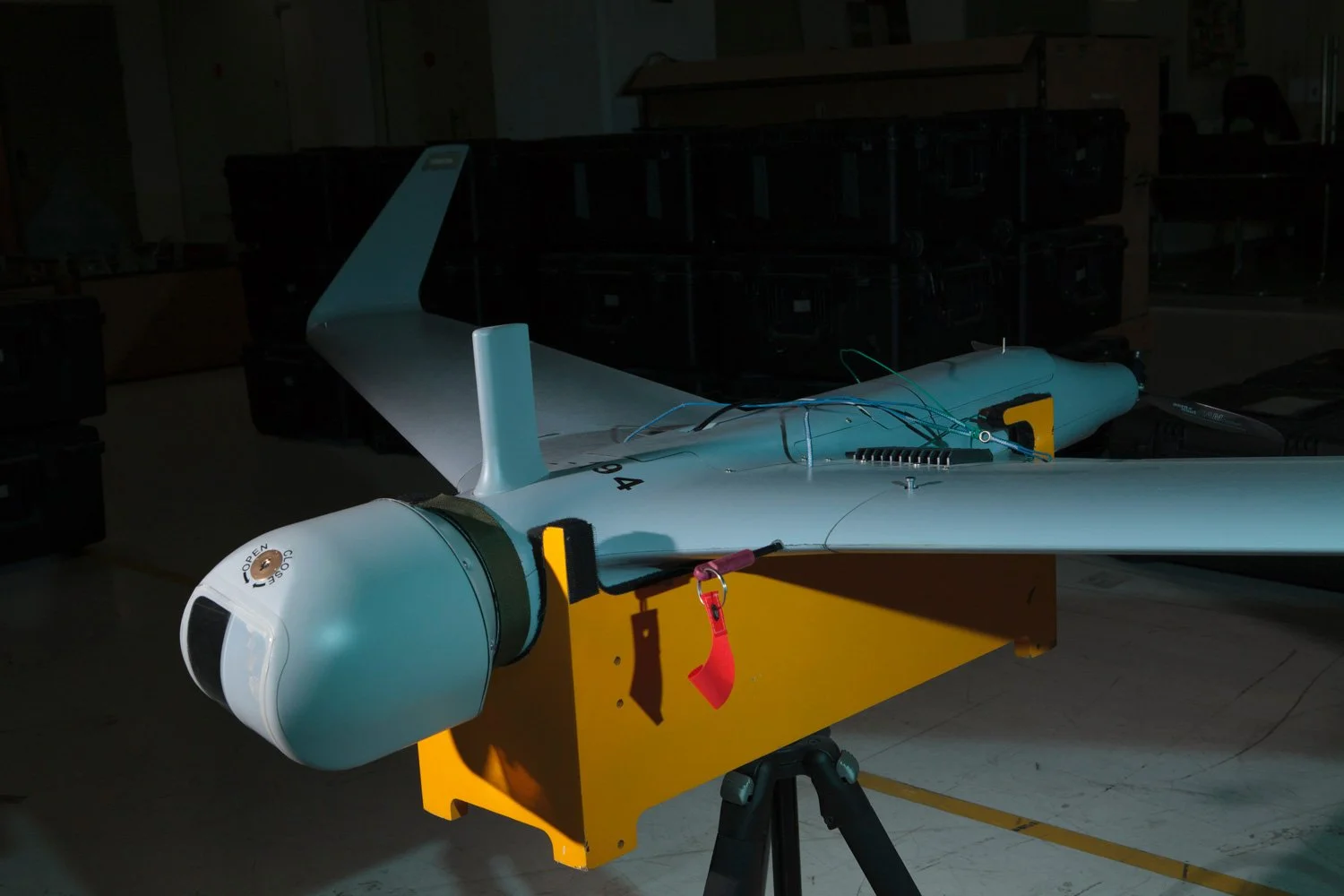
The Orbiter mini UAV inside the Aeronautics Defense Systems factory in Yavne, Israel. This highly autonomous UAV can locate and track moving targets while piloting itself along a patrol route. The Orbiter is flown by military forces in over 30 countries including Mexico, Ireland, and Poland.
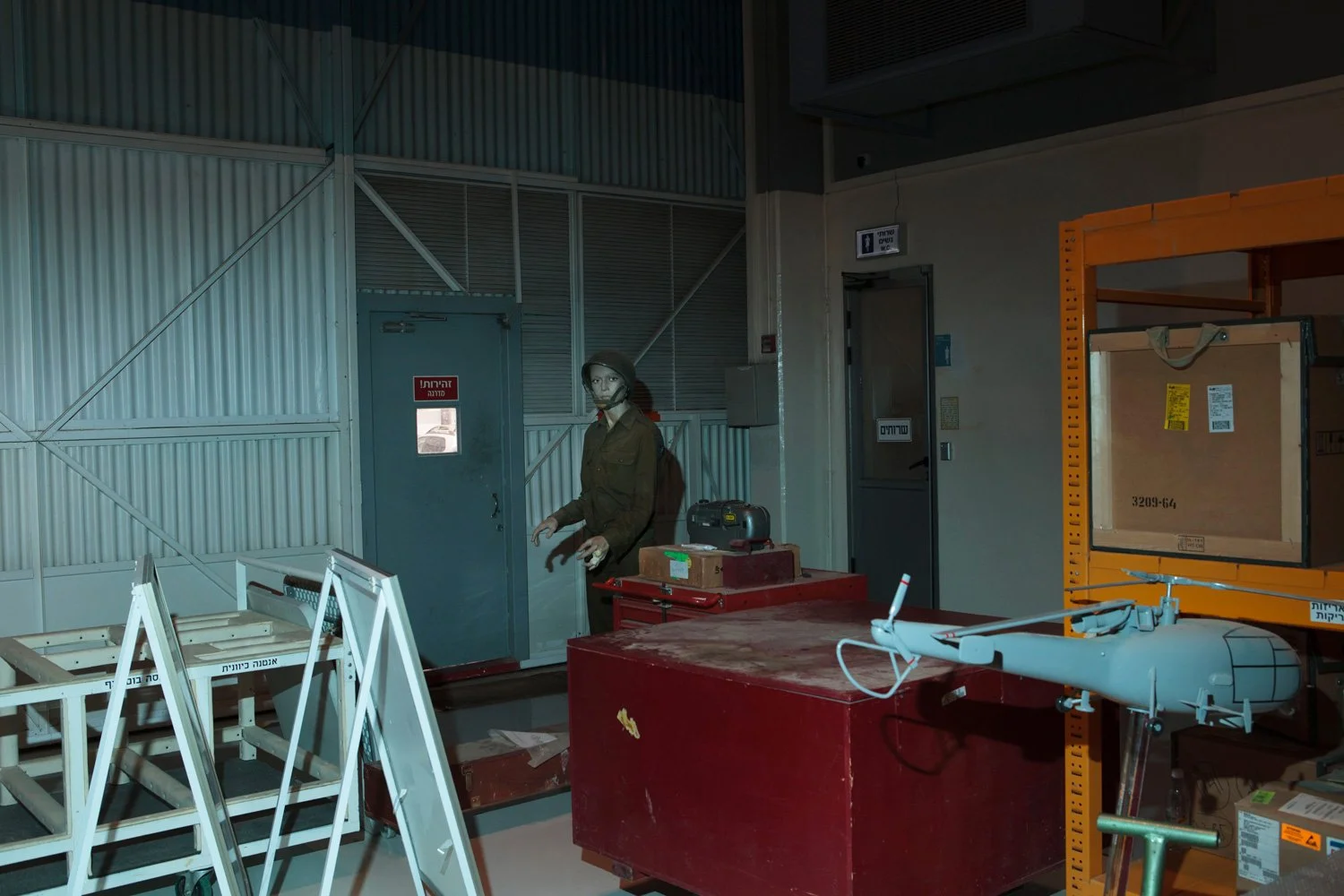
Inside a hangar at Israeli Aerospace Industries’s (IAI) main facility, near Ben Gurion Airport, Israel.

Near the Israel-Gaza Border, Southern Israel An Aeronautics Orbiter 3 flies overhead during a demonstration.
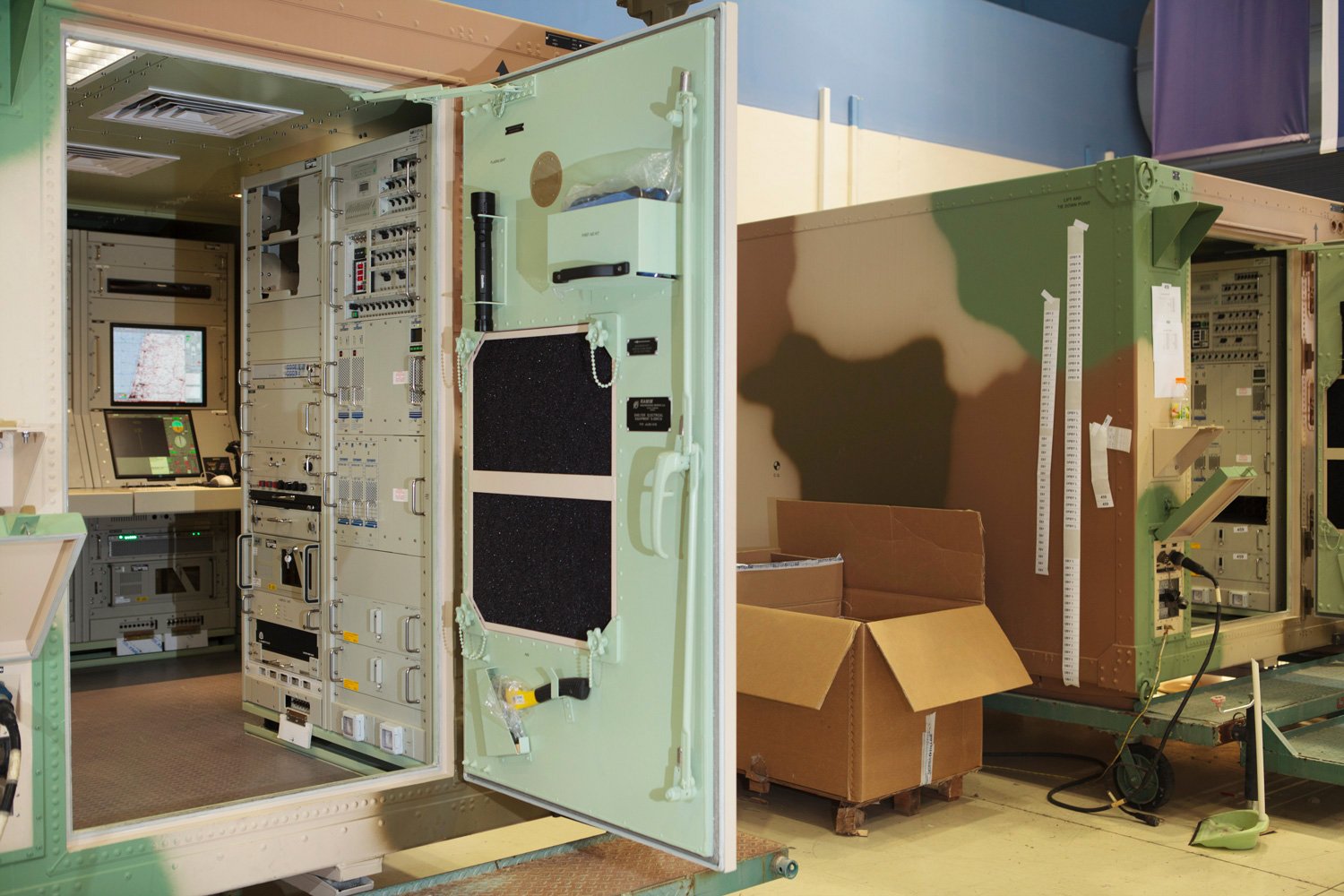
Near Airport City, Israel - Ground control stations used to pilot large drones, built inside of camouflaged shipping containers at IAI’s main production facility.

Gaza - A young boy marching in a parade of Al-Qassam youths in Gaza City. Al-Qassam is the military wing of Hamas, the Palestinian-Islamist political regime that controls the Gaza Strip.
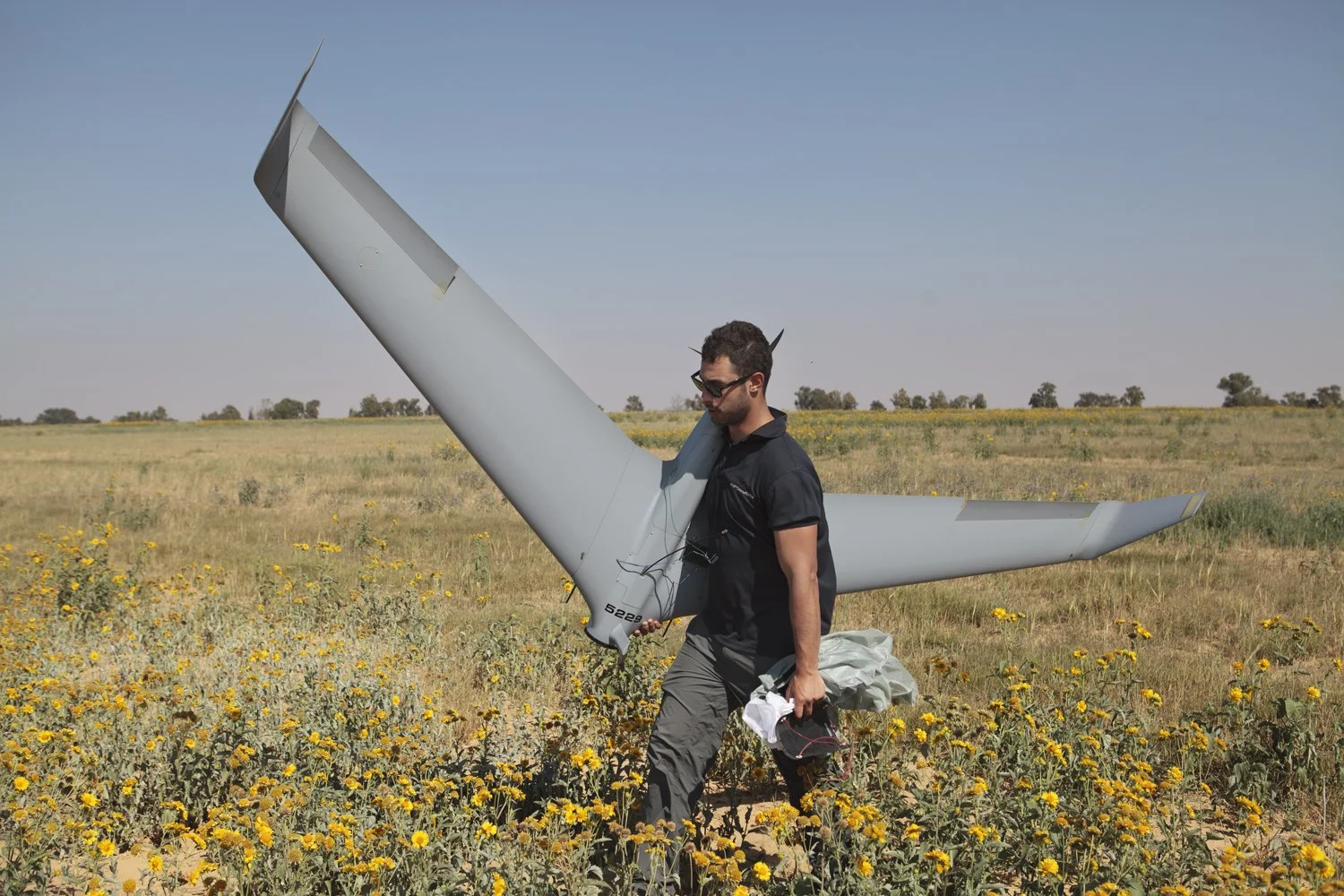
An employee of Aeronautics recovers an Orbiter UAV during a demonstration for potential buyers, in Southern Israel, close to the border with Gaza. To land, the Orbiter drone shuts off its motor, deploys a parachute, and slowly falls to the ground.
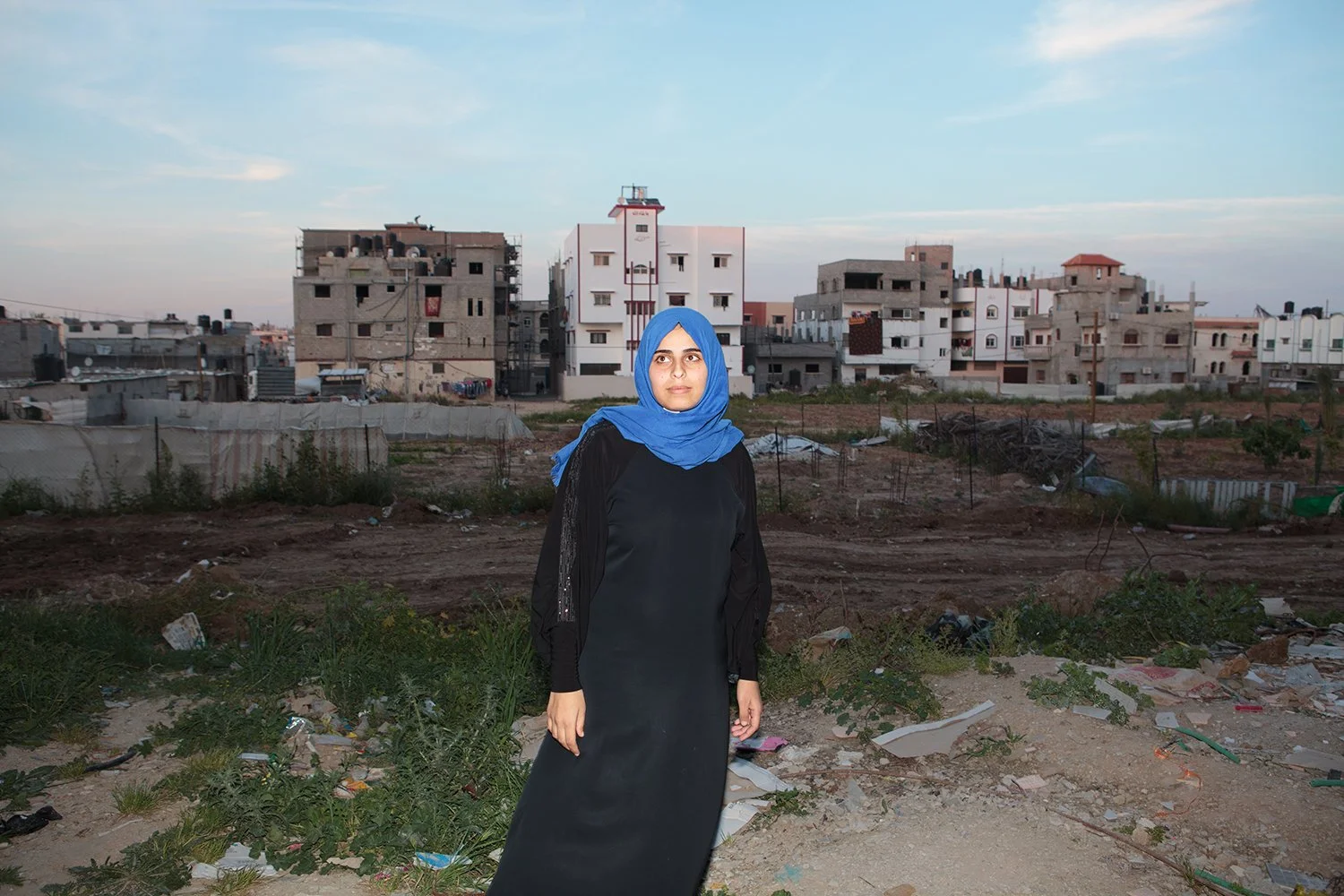
Shuja'iyya, Gaza - Eslam Shamali stands amid the rubble of her destoryed home. Eslam’s brother was a Hamas commander who died during the 2014 War.

An empty workroom inside the Areo Sol factory in Petah-Tikva, Israel

A warhead from a missile that failed to detonate during the 2014 war, encased by a fragmentation jacket. The jacket is composed of thousand of tiny metal cubes, known as shrapnel, which increases the weapon's lethality. Gaza City

Gaza - A shrapnel cube, 1mm in size, coated with an unidentified explosive substance from an undetonated LAHAT missile.
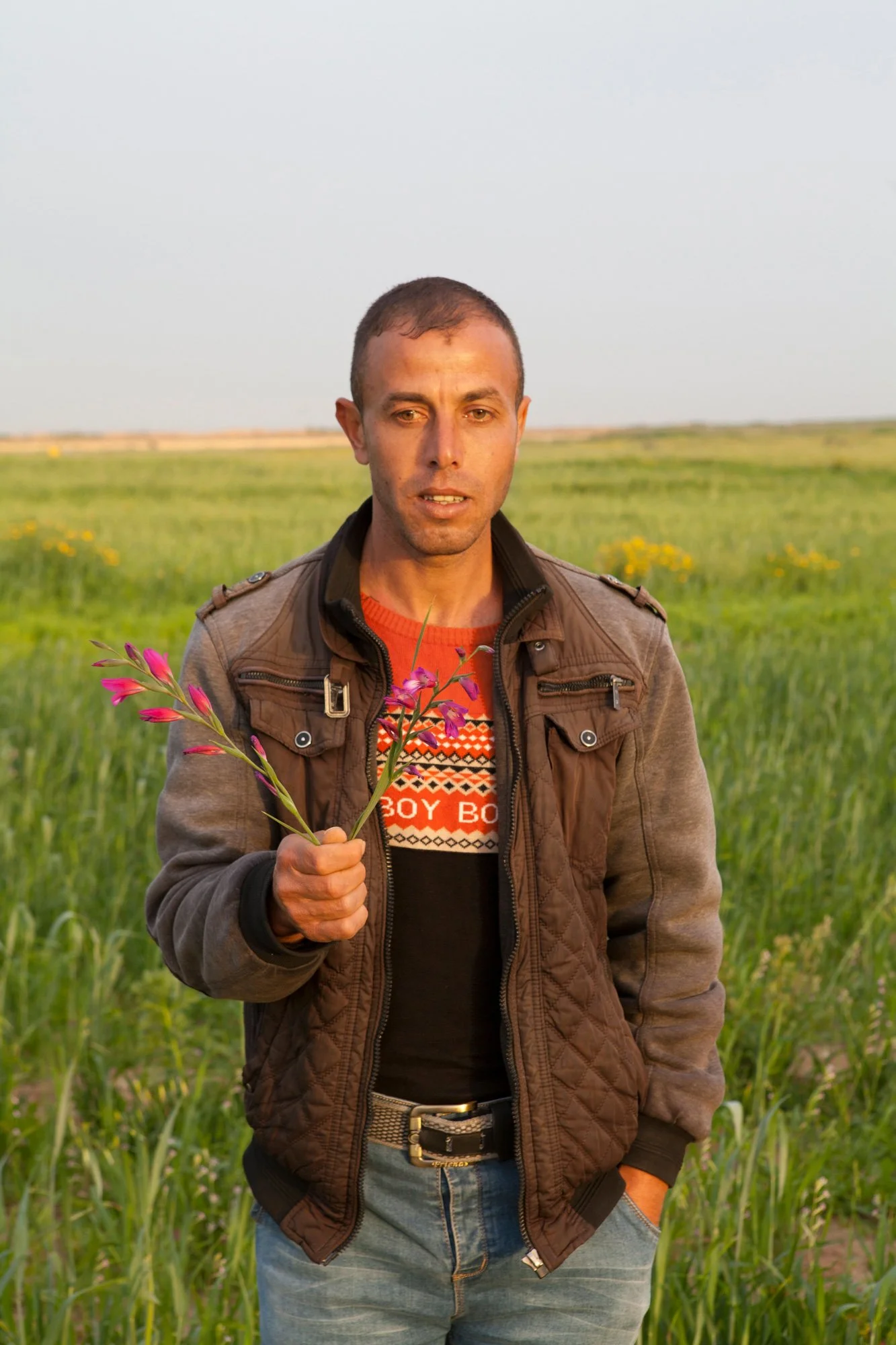
Al-Faraheen, Gaza Strip Sadki Chaheen, a farmer who lives and works close to the border with Israel. When drones fly above the area, farmers are reluctant to work in their fields for fear of being targeted. "Usually one drone or two drones fly above our fields. If we hear the sound of the drone and it is really close and if there's more than two drones in the sky we recognize that something wrong happened in the buffer zone areas and we start to escape from our fields immediately."
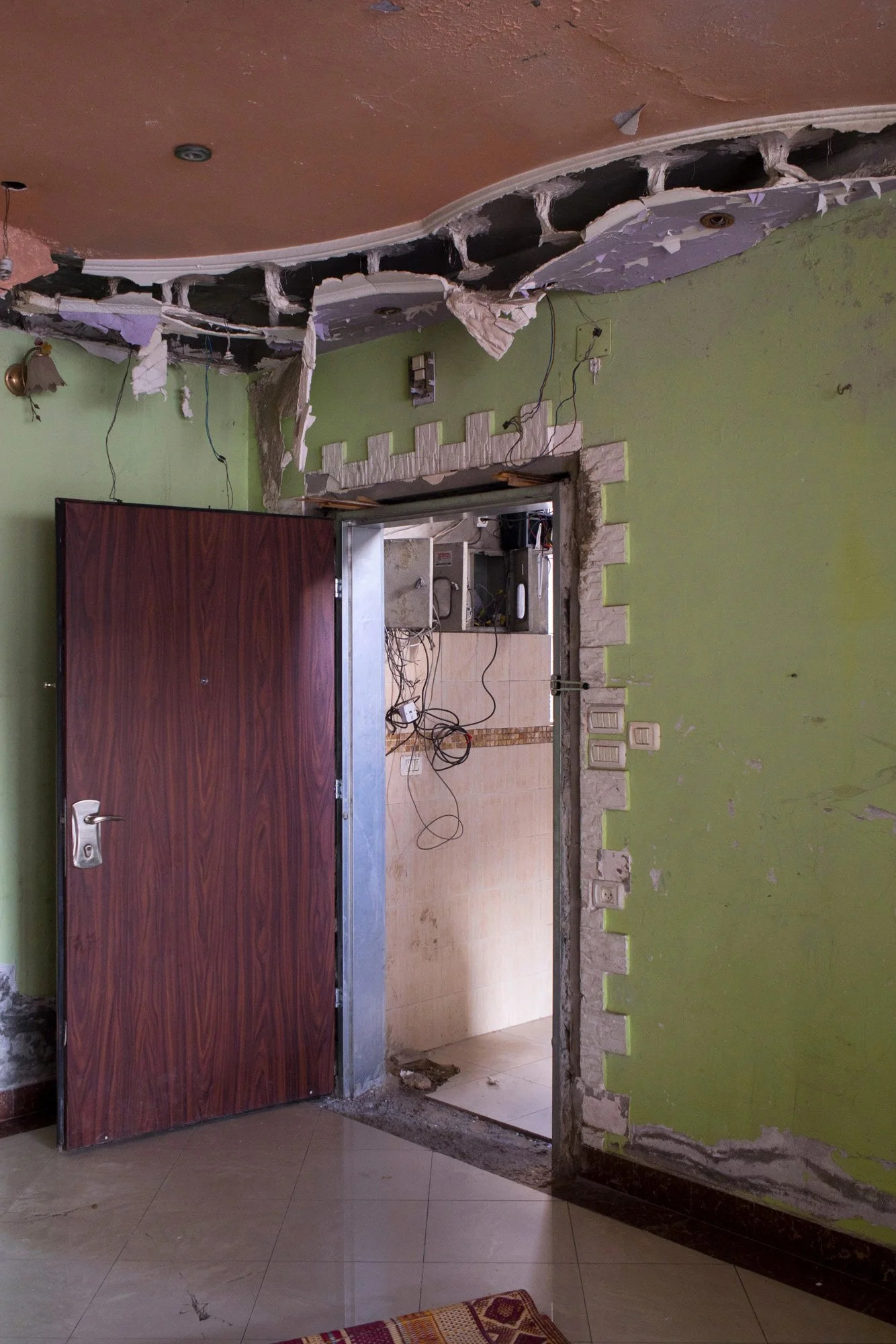
Gaza - Inside a home that was hit by an Israeli airstrike during the 2014 War.
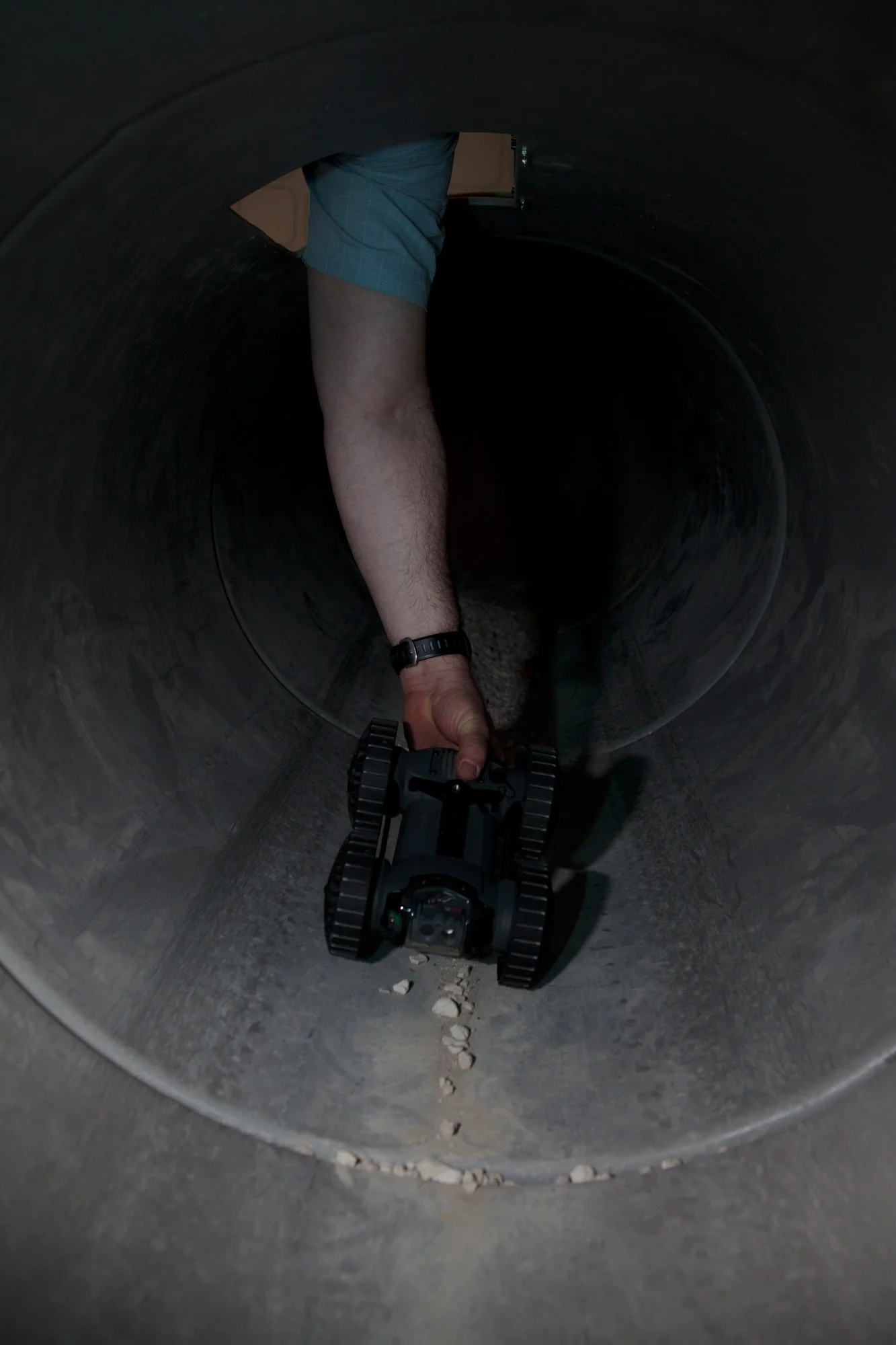
Tel Aviv, Israel - The Iris mini-tactical robot at the Robo-Team factory.
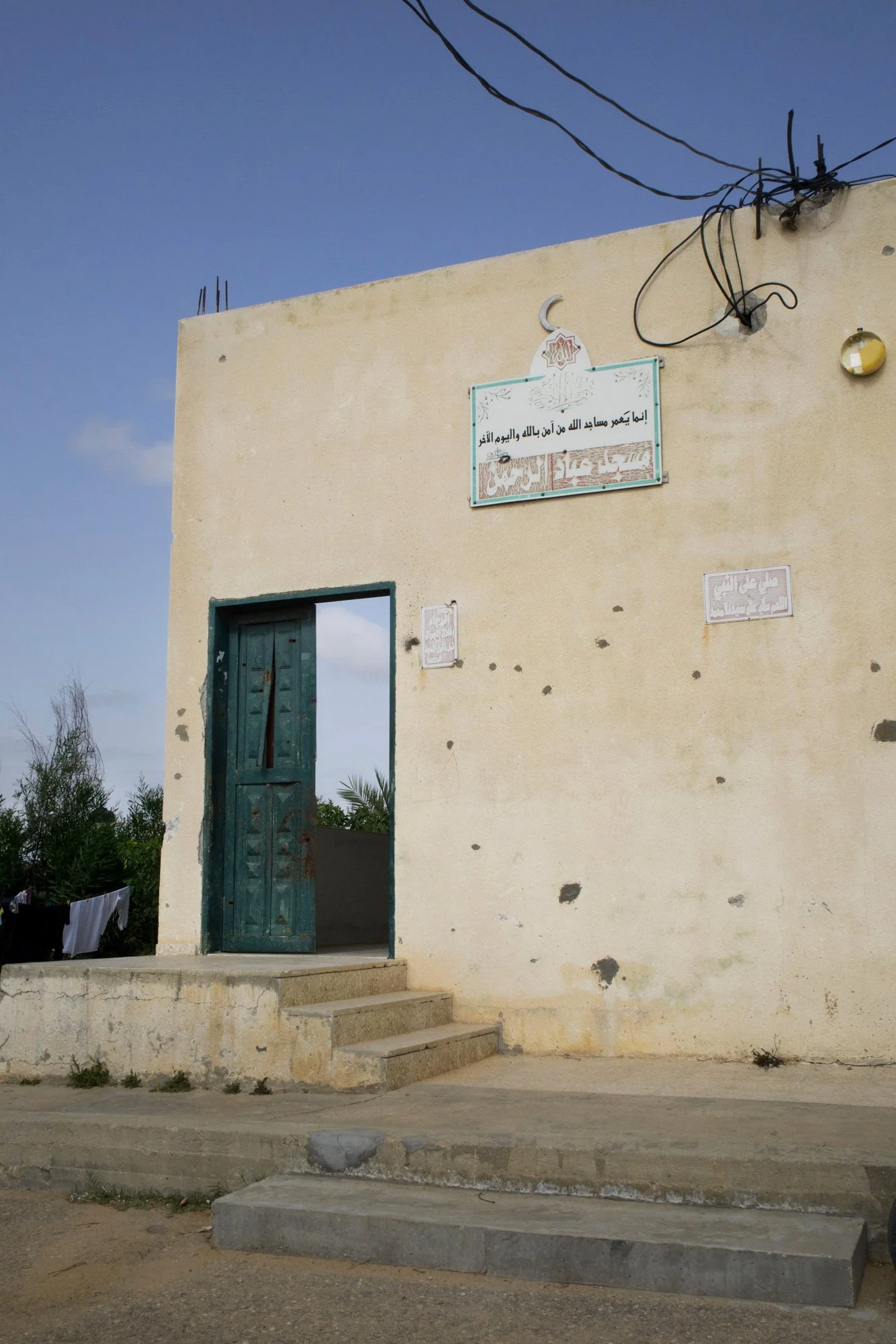
Wadi al-Salqa, Gaza Strip. Shrapnel damage at the site of an Israeli drone strike that killed a fifteen year old boy in 2012.
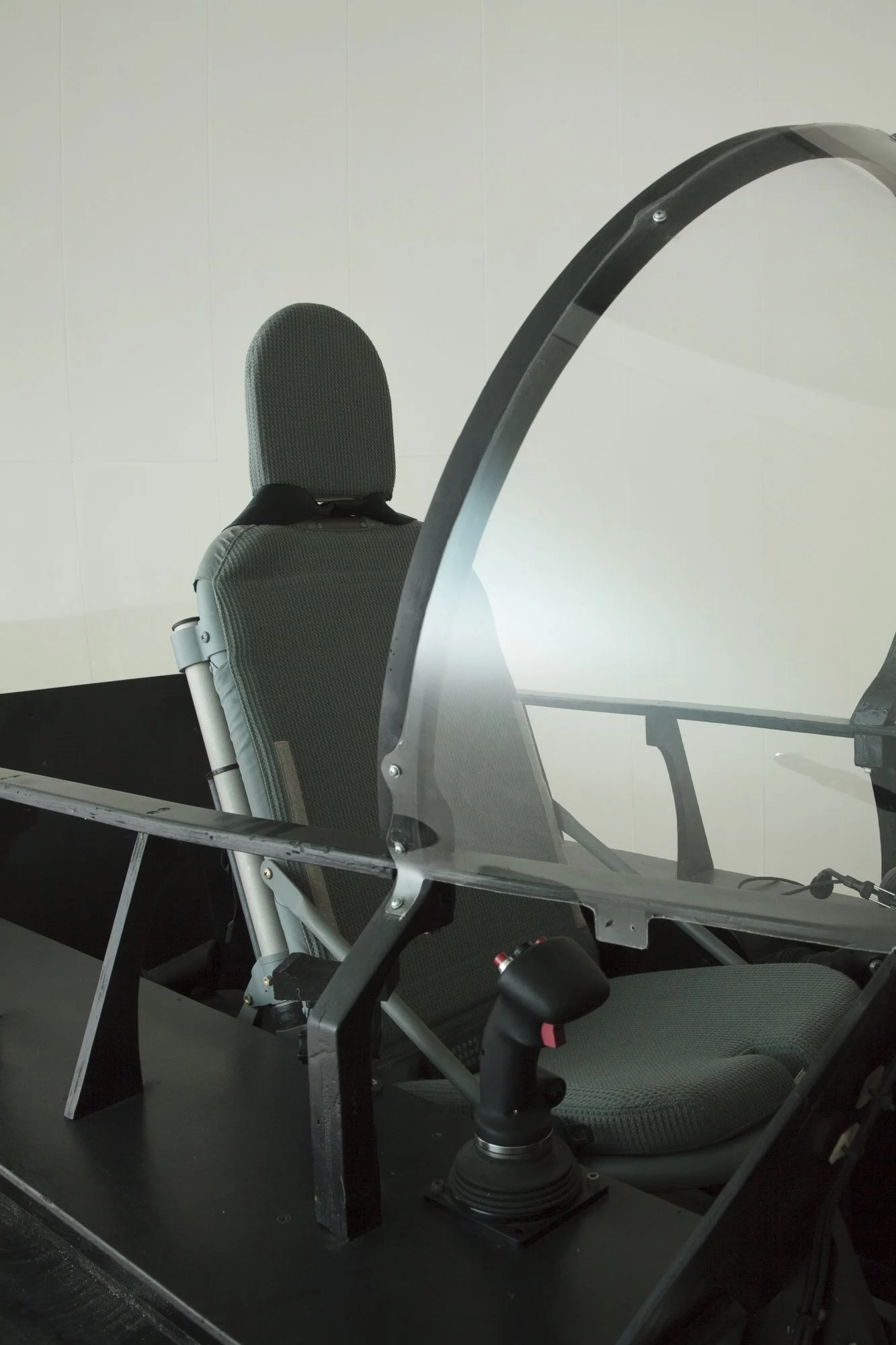
Yavne, Israel - A flight simulator inside the Tactical Robotic factory.
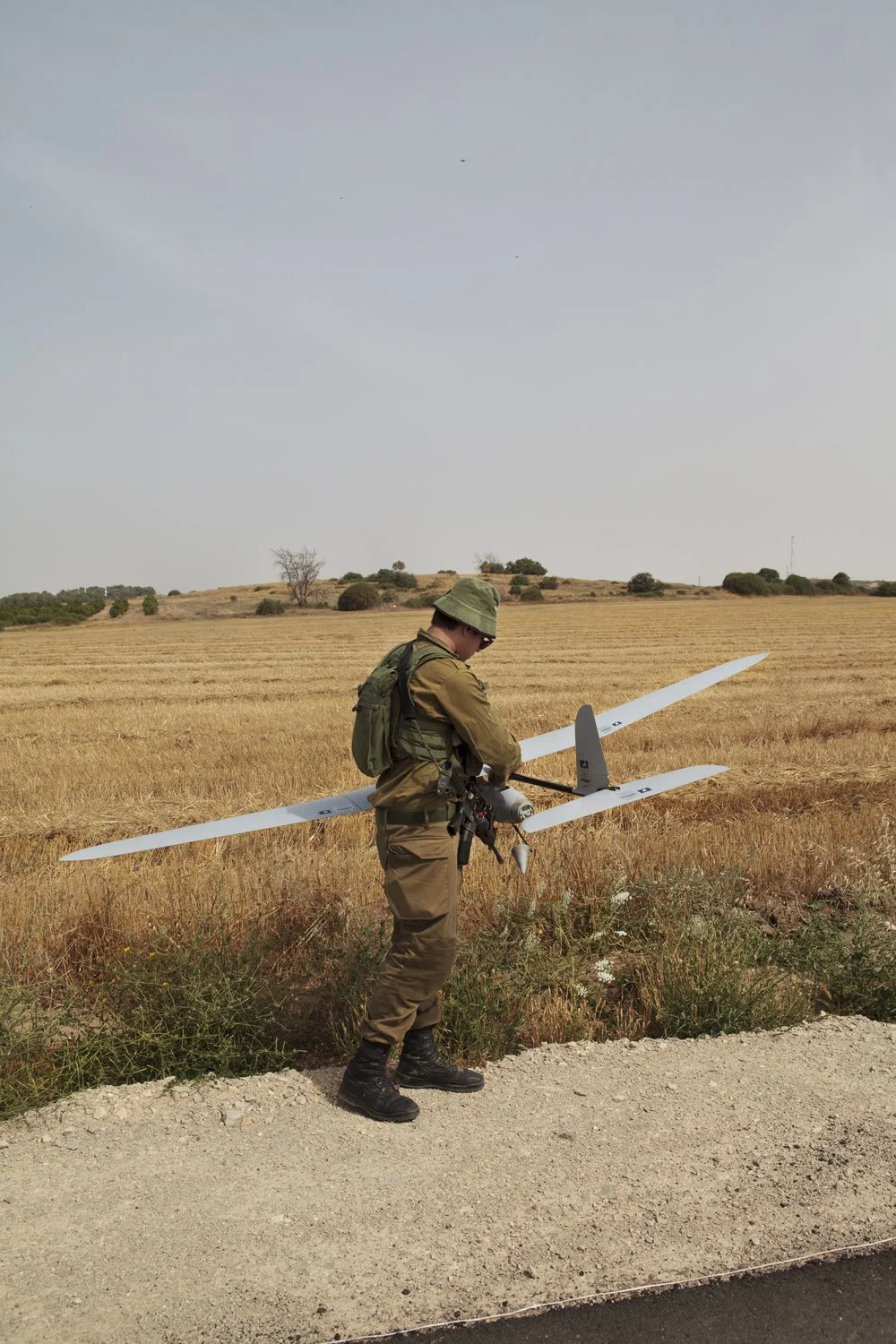
Southern Israel - A soldier in the Sky Rider unit tests the Skylark mini-UAV before launch during a demonstration.
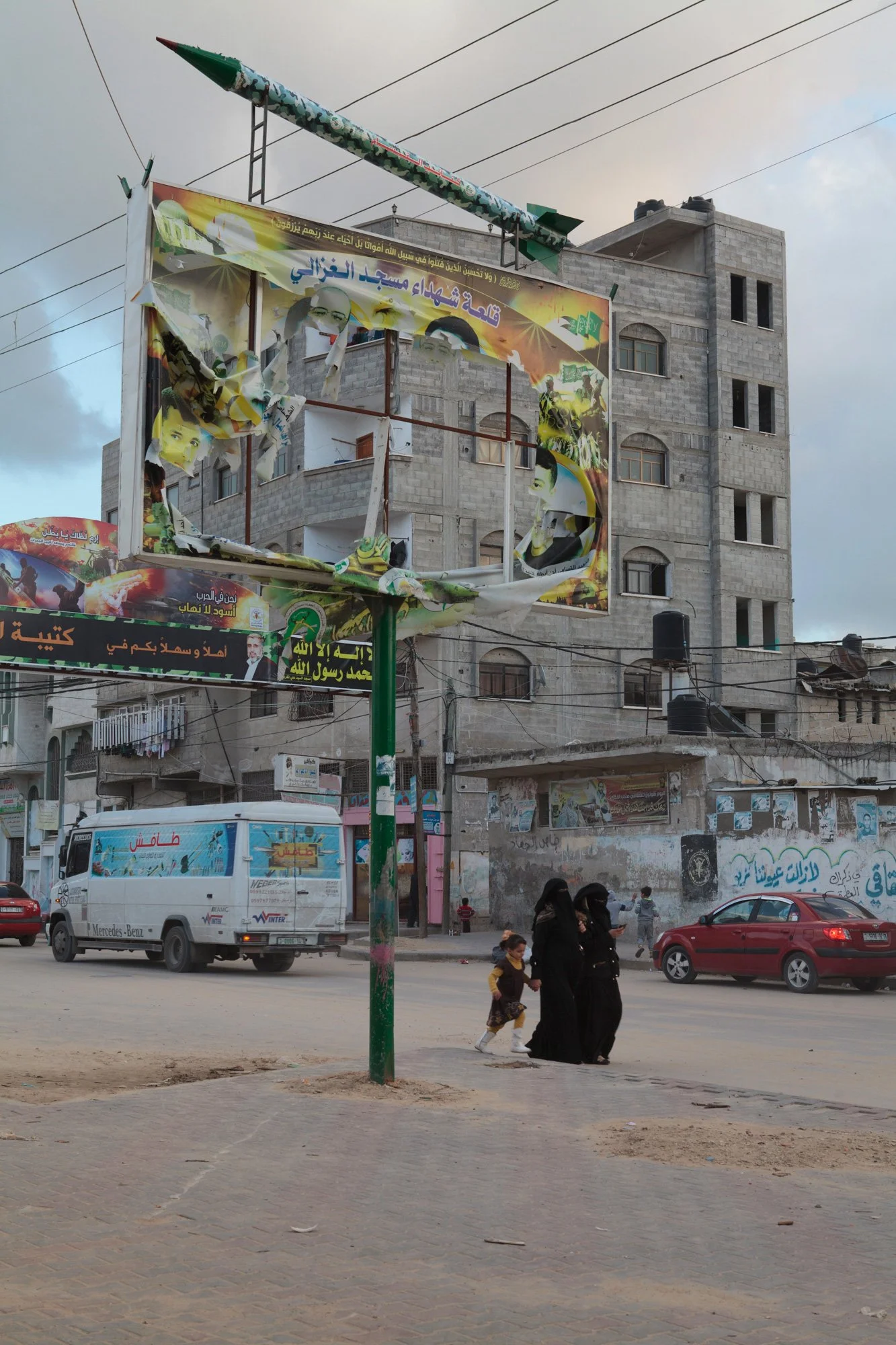
Street in Shuja'iyya, Gaza.
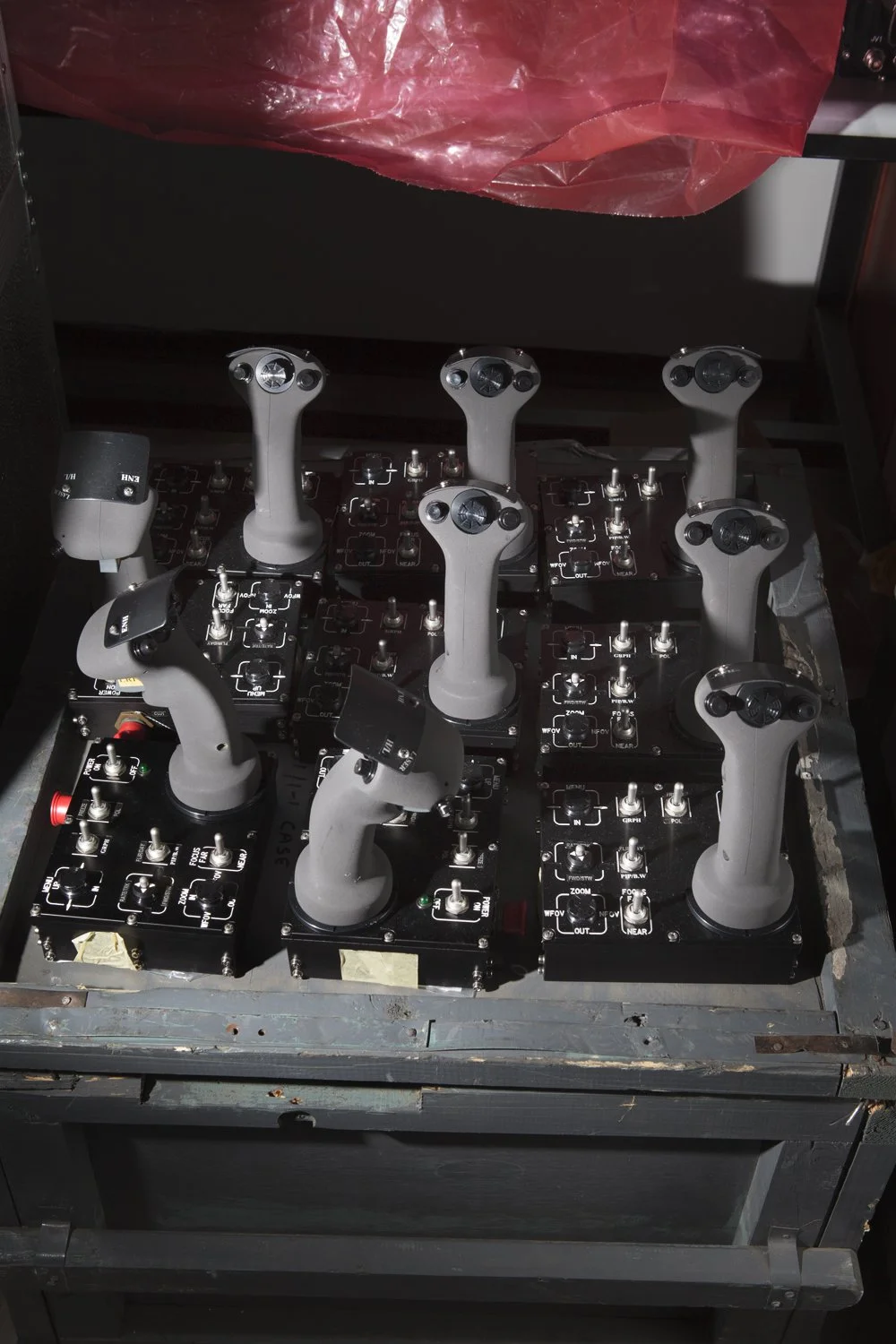
Petah-Tikva, Israel - Joysticks used to control the cameras carried inside optical payloads made by Controp, at the company’s factory.
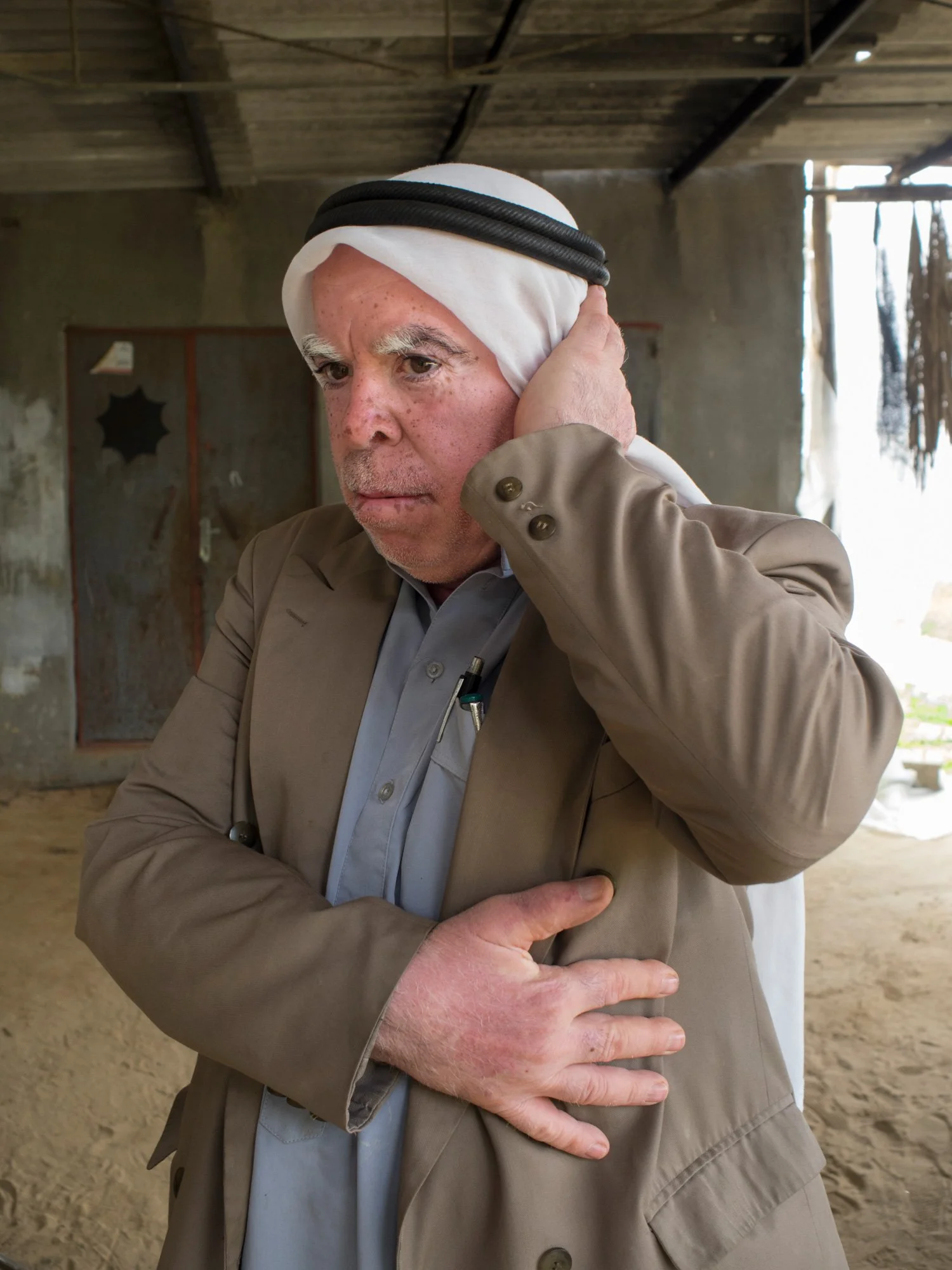
Wadi al-Salqa, Gaza - Ibrahim al-Remahi holds his hands to the parts of his body that were injured in a drone strike that killed three of his children during the 2014 War.

Near Peta Tikvah, Israel An optical payload is pointed out a the window as it undergoes calibration at a factory belonging to Controp, an Israeli company that specialises in optics and camera systems used by drones.
Above Gaza, 2016
Since the early 2000’s persons living in Gaza have seen and heard Israeli drones flying above them. Their distinct sound earned the drones the name zenana, Arabic for ‘buzzing’ or mosquito. Soon it became apparent that the drones were armed and could strike anywhere without warning.
The drones have since become a disturbing part of daily life for those living in Gaza. Many feel that these unmanned aircraft have become a constant presence in their lives, a reminder that Israel has them under a deadly surveillance.
Israel pioneered the use of aerial drones in the 1970’s and 80’s, first integrating the technology into combat operations during wars with Lebanon and other Arab nations. Early experience on the battlefield aided the development of a robust drone industry that has emerged as one of the top global exporters of unmanned vehicles in the world today.
Inside Israel, drones are considered a humanitarian weapon, keeping pilots out of danger while minimizing civilian casualties on the ground. The appeal of the technology has led to the widespread use of drones by the Israeli military to carry out strikes during fighting with armed Palestinian groups in Gaza. And with each new round of conflict, more civilians are falling victim to drone strikes.
Looking to investigate the production of drones inside Israel and visualize the consequences of the technology on civilians in Gaza, Vittoria Mentasti and Daniel Tepper photographed Israeli drone factories, with the Israeli military, and throughout Gaza.
Over the years, armed aerial drones have played a larger role in Israel’s fight against armed Palestinians on the ground. A report on the 2014 War by the Palestinian Center for Human Rights attributed almost one-third of all civilian casualties, 496 persons out of 1543 total civilians killed, to drone strikes.
Gaza City - Ezz Al Zaanoon, a Palestinian photojournalist.
“The most scary part in the war is the drone, not like the F-16. When it's flying they have a special target. The drone is still in the sky and watching. It's one press on a button and I can die.
The first time I saw a rocket from a drone was when my brother Mohamed got injured in a drone strike in 2006. It was the first time that we knew that a drone could target people. Drones are a sign here for Gazans, everyone knows it, everyone has an experience with it somehow.”
Jabalia Refugee Camp, Gaza - Muhamed al-Silawi survived a drone strike that targeted a mosque in 2009, killing at least 15 persons and injuring many more.
"The concept of the drone has become like someone who physically exists inside our houses. Like if we would like to have our breakfast we leave space for someone to eat, the drone is exactly the same - it exist in every single detail in our daily life. And for me as a father who should protect his sons from any danger, I'm trying always to do something to lessen the fear for my children, and get them to focus on something else, when they hear the sound of the drone."